

Center introduction
The Objective of University Lab for Electronic Engineering Education(ULEEE)is to establish a complete experimental training system for the students, implement active learning teaching methods and enhance the design-based, research-oriented, practice-based educational content to meet the national development needs of the creative talents. Labs in ULEEE today are:
l Electronic Circuits Laboratory
l Exploratory & Creative Laboratory
l Laser Darkroom
l Physical Electronics and Optoelectronics Laboratory
l Modern Communication Circuit Laboratory
l Electromagnetic Field and Microwave Laboratory
l Modern Communication Laboratory
l Computer and Network Laboratory
l Integrated Electronic Systems Design Laboratory
l Signal Processing Laboratory
l Media and cognitive Laboratory
And the united labs are:
l Tsinghua-Keysight Lab for Modern Communication
l Tsinghua-Keysight Lab for Modern Communication Circuits
l Tsinghua-Keysight Lab for Electromagnetic and Microwave
l Tsinghua-Keysight EEsof ADS Lab for Microwave Simulation
l Asus-Tsinghua Lab for Teaching & Research of NG Portable Digital Equipment
l ZTE Certified NC Engineer Lab for CN Teaching of EE Dept.
l Tsinghua-Altera SOPC/DSP Lab and Training Center
l Tsinghua-Xilinx Teaching Lab for Digital Systems
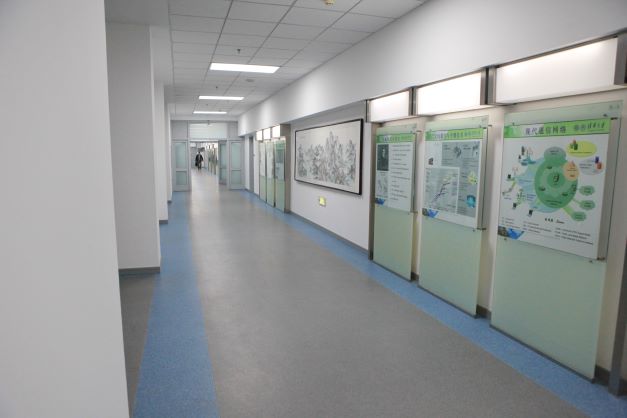
The ULEEE covers nearly 1500 square meters, has more than 1200 units of equipment, with total assets of nearly 20 million Yuan. There is 15 full-time staff, including 4 professors, 5 associate professors, 3 engineers and 3 supporting personnel. The ULEEE provide 40 courses and 270 experimental projects for almost 2000 undergraduates and graduates from EE Dept. and Information School every year, with the teaching workload of nearly 180 thousand person time.
The ULEEE aims to cultivate students into high-quality, versatile talents with a solid theoretical base in electronics, skills at measurement and design techniques as well as the knowledge of other related disciplines. With creative minds, team-work spirits and comprehensive high qualities, the students are expected to be capable of scientific research, teaching, technology development and management in electronics fields as test radio technology, sensor technology, communication, information processing, computer applications and electrical engineering.
We insist practice should be involved with new developments in electronic technologies. Through combining continuous integration and updating teaching to hold the teaching contents’ basic, advanced, and contemporary characteristics. Moreover, the hierarchical, independent and open teaching system is set up, to promote the transition from separate to comprehensive utilization of experimental resources, from traditional teaching to full open service model, from cognitive to practice innovative style.
Talents’ cultivation is system engineering, it relates to many aspects of high education. At present, the center has done some preliminary attempt in the cultivation conception, cultivation measures and cultivation scheme, but in fact, the combination of in class and extracurricular resources, the relationship between innovation education and professional education, the interactive of Talents’ cultivation and Contest training, and the Transfer of training and the realistic productive forces, have yet to be further exploration and research. We also sincerely hope that, these innovative education efforts, not only helps to cultivate students' innovation ability, also can be beneficial for reference for national education reform.